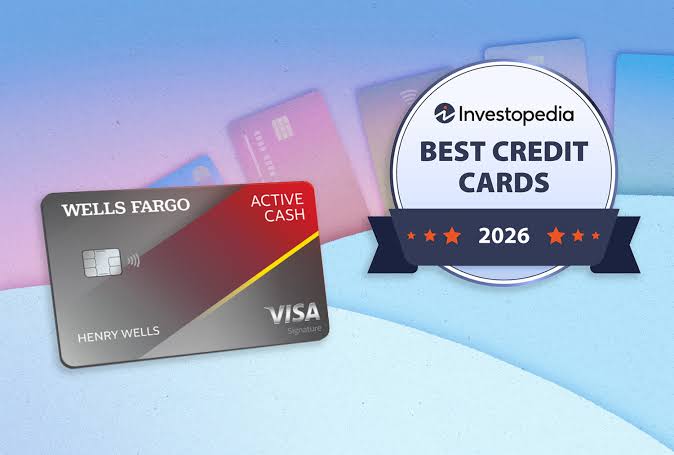
Fast food is one of the most common types of everyday spending in the United States. Whether you’re picking up a quick lunch, ordering dinner for your family, stopping for breakfast, or grabbing fries and a burger on the way home, restaurant purchases can add up quickly over the course of a month.
The good news is that some credit cards can turn this regular spending into rewards, points, or cash back.
Instead of looking only for the biggest sign-up bonus, fast-food customers should pay attention to the rewards they can earn on dining, restaurant purchases, takeout, and eligible food-delivery transactions. Some cards offer a higher reward rate specifically for dining, while others provide a strong flat rate on everyday purchases.
Current 2026 comparisons include cards such as Capital One Savor Cash Rewards, Chase Freedom Unlimited, Chase Freedom Flex, Bank of America Customized Cash Rewards, and Wells Fargo Autograph among cards recognized for restaurant rewards.
The best card for you ultimately depends on how much you spend, where you eat, whether you prefer cash back or points, and whether you are comfortable paying an annual fee.
Why Use a Credit Card for Fast Food?
Using a credit card for restaurant purchases doesn’t automatically make fast food cheaper. The advantage comes from earning rewards on purchases you were already planning to make.
For example, imagine a household spends $400 each month on restaurants and fast food.
That’s:
$400 × 12 = $4,800 per year
If a card provides a 3% reward on eligible dining purchases, the theoretical reward would be:
$4,800 × 3% = $144
That isn’t enough to justify unnecessary spending, but it can be a useful benefit when the purchases are already part of your normal budget.
The important rule is simple: never spend extra money just to earn credit-card rewards.
A reward is only valuable when you avoid unnecessary interest and fees.
What Makes a Credit Card Good for Fast Food?
There are several factors to consider when comparing cards.
1. Dining Reward Rate
The first thing to check is how much the card rewards eligible restaurant purchases.
A card may advertise 3%, 4%, 5%, or another rate, but you should read the terms carefully because the definition of an eligible purchase can vary.
2. Annual Fee
A card with a higher reward rate isn’t necessarily the best choice.
Suppose Card A has no annual fee and provides 2% back on eligible spending.
Card B provides 3%, but charges a $95 annual fee.
If you spend only a small amount on restaurants, Card A may provide more value after fees.
3. Sign-Up Bonus
Some cards offer a large introductory bonus after you meet a minimum spending requirement within a specified period.
This can be valuable, but it shouldn’t be the only reason you choose a card.
If you cannot comfortably meet the spending requirement through normal purchases, the bonus may encourage unnecessary spending.
4. Redemption Options
Cash back is easy to understand.
Points can be more complicated.
Some programs allow points to be redeemed for:
- Statement credits
- Cash
- Gift cards
- Travel
- Merchandise
- Other rewards
Look at how much your rewards are actually worth before choosing a card.
5. APR
The interest rate matters because carrying a balance can quickly eliminate the value of your rewards.
For example, earning a few dollars in cashback while paying significant interest charges isn’t a good financial strategy.
Best Credit Card Categories for Fast Food
Rather than focusing on one particular card, it helps to understand the main categories.
Best for Dining Rewards
Dining-focused cards can be attractive to people who regularly spend money at restaurants.
Current U.S. card comparisons include options offering enhanced dining rewards, such as Capital One Savor Cash Rewards, Chase Freedom Unlimited and Wells Fargo Autograph.
The exact reward rates, eligibility requirements and terms can change, so always verify current information with the card issuer before applying.
Best for Simple Cash Back
If you don’t want to keep track of rotating categories or complicated points systems, a simple cashback card may be easier.
For example, a flat-rate rewards card can provide the same percentage on many everyday purchases.
The advantage is simplicity.
You don’t need to remember which category is active this quarter or whether a particular restaurant qualifies for a special promotion.
Best for Frequent Delivery Users
People who frequently order fast food through delivery services should pay attention to whether their card treats those transactions as dining, delivery, online purchases, or another category.
The distinction can matter.
A restaurant purchase made directly at the restaurant may be coded differently from an order made through a third-party delivery platform.
Always check the card’s terms rather than assuming both transactions receive the same reward.
Do Fast-Food Restaurants Count as Dining?
This is one of the most important questions when choosing a restaurant rewards card.
A card may advertise a dining category, but the actual reward depends on how the merchant transaction is categorized.
Fast-food restaurants can sometimes qualify as dining, but not every transaction will necessarily receive the same reward.
The payment method can also matter.
For example:
Restaurant → direct purchase
may be categorized differently from:
Restaurant → third-party delivery app → credit card
Some card issuers specifically define eligible purchases according to merchant category codes or other transaction classifications.
This means you should never assume that a promotional dining rate applies to every food purchase.
Credit Cards and Checkers Purchases
If you regularly visit fast-food chains such as Checkers, your normal restaurant spending can potentially become part of a broader rewards strategy.
For example, suppose you already visit Checkers once or twice each week.
Instead of changing your eating habits to earn rewards, you could use an appropriate rewards card for purchases you were already going to make.
You should still compare:
- The restaurant’s current prices
- Available promotions
- Your credit-card rewards
- Any applicable fees
- Your monthly food budget
A credit-card reward should be considered an additional benefit, not a reason to increase your restaurant spending.
How Much Can You Save With Restaurant Rewards?
Let’s use a simple example.
Suppose you spend $250 per month on eligible restaurant purchases.
Your annual spending would be:
$250 × 12 = $3,000
At 2% rewards:
$3,000 × 0.02 = $60
At 3% rewards:
$3,000 × 0.03 = $90
At 4% rewards:
$3,000 × 0.04 = $120
The difference between 2% and 4% is $60 per year.
That may not sound dramatic, but households with significantly higher restaurant spending can see a larger difference.
However, a higher percentage isn’t automatically better if the card has an annual fee.
Don’t Forget the Annual Fee
Consider two hypothetical cards.
Card A
- 2% restaurant rewards
- $0 annual fee
Card B
- 4% restaurant rewards
- $95 annual fee
If you spend $3,000 annually on restaurants:
Card A could provide approximately $60 in rewards.
Card B could provide approximately $120 before considering the annual fee.
After a $95 fee, the second card would provide only $25 of net value from that restaurant spending alone.
This illustrates why you should evaluate the entire card rather than focusing on one percentage.
Can You Combine Credit-Card Rewards With Restaurant Deals?
Sometimes.
You may be able to combine credit-card rewards with restaurant loyalty programs, coupons, or promotional offers, but the exact rules depend on the restaurant, card and promotion.
A useful strategy is to think about the purchase in layers.
Layer 1: Restaurant Discount
Look for an eligible restaurant coupon or promotion.
Layer 2: Loyalty Program
If the restaurant has a rewards program, make sure you’re receiving eligible points or benefits.
Layer 3: Credit Card
Use a suitable rewards card for the transaction.
This can potentially provide several benefits from one purchase.
However, always read the terms because some offers cannot be combined.
Fast Food Credit Cards vs. Cashback Apps
Credit cards aren’t the only way to save money on restaurant purchases.
Some consumers also use cashback portals, restaurant loyalty programs and shopping apps.
Before using multiple programs, calculate the actual savings.
A complicated process that saves $1 but takes 20 minutes may not be worth your time.
Simple systems are often easier to maintain.
Should You Choose Points or Cash Back?
This depends on your spending habits.
Cash Back
Cashback is usually straightforward.
You spend money and receive a percentage back according to the card’s terms.
It can be particularly appealing if you don’t want to manage a complicated rewards program.
Points
Points may provide more flexibility.
Depending on the card, points can potentially be redeemed for travel, gift cards, statement credits or other rewards.
However, the value of a point can vary depending on how you redeem it.
If you prefer simplicity, cashback may be easier.
If you are comfortable learning a rewards system, points may offer additional options.
What About Credit-Card Sign-Up Bonuses?
Sign-up bonuses can be valuable, but they should be approached carefully.
A typical offer may require you to spend a specified amount during the first few months after opening the account.
For example, a hypothetical offer might require $3,000 in purchases within three months.
If you normally spend $1,000 per month on rent-eligible purchases, groceries, bills and other expenses that can legitimately be paid with a card, meeting the requirement may be possible.
But if you normally spend only $500 per month, don’t purchase unnecessary items simply to reach the bonus threshold.
The bonus isn’t free money if you create debt to obtain it.
Always Pay the Balance on Time
This is arguably the most important rule in the entire article.
Credit-card rewards are designed to encourage spending, but interest charges can overwhelm the value of those rewards.
Suppose you earn $100 in rewards during the year.
If carrying a balance causes you to pay hundreds of dollars in interest, the reward has not improved your financial position.
For many consumers, the best strategy is to use the card for planned purchases and pay the statement balance according to the card’s terms.
How to Track Your Restaurant Rewards
You don’t need a complicated spreadsheet.
At the beginning of each month, estimate your restaurant budget.
For example:
Monthly restaurant budget: $300
Then track your spending.
If you reach $300, consider whether additional restaurant spending fits within your overall financial plan.
You can also check your credit-card rewards periodically to see how much value you are actually receiving.
Credit Cards and Food Delivery
Food delivery deserves special attention.
A $20 restaurant meal can become considerably more expensive after delivery and service charges.
For example:
- Food: $20
- Delivery: $3
- Service fee: $2
- Tip: $4
Total:
$29
If you earn 3% rewards on the eligible purchase, the reward would be only about $0.87.
That means the credit-card reward doesn’t compensate for unnecessary delivery costs.
The better strategy is to reduce the total cost first and then earn rewards on the remaining eligible purchase.
Restaurant Rewards vs. Delivery Discounts
Suppose a delivery app offers $5 off an order while a credit card provides 3% rewards.
On a $30 purchase:
3% rewards = $0.90
A $5 promotional discount = $5
The promotion is much more valuable in this example.
This is why you should never focus solely on credit-card rewards.
Look at the complete price.
A Smart Fast-Food Savings Strategy
A practical system could look like this:
Step 1: Decide your monthly restaurant budget.
Step 2: Check the restaurant’s current deals.
Step 3: Compare pickup and delivery.
Step 4: Use loyalty-program benefits when appropriate.
Step 5: Pay with a suitable rewards card.
Step 6: Pay the credit-card balance on time.
This approach focuses on the entire transaction rather than one reward percentage.
Are Premium Credit Cards Worth It?
Premium cards can provide benefits beyond restaurant rewards.
Depending on the card, these may include:
- Travel benefits
- Airport lounge access
- Travel protections
- Purchase protections
- Dining benefits
- Statement credits
- Higher reward rates
But premium cards often come with higher annual fees.
If you don’t use the benefits, paying the fee may not make sense.
A frequent traveler who also spends heavily on dining may receive much more value than someone who only purchases fast food occasionally.
What Credit Card Should a Family Choose?
Families should consider their total household spending.
If a family spends heavily on:
- Restaurants
- Groceries
- Gas
- Travel
- Online shopping
a card that rewards multiple categories may be more useful than a card focused only on restaurants.
For example, a family may earn restaurant rewards while also receiving benefits from grocery or travel spending.
The best card is usually the one that matches your actual spending pattern.
What Credit Card Should a College Student Choose?
Students should generally prioritize simplicity and responsible credit use.
A complicated rewards system isn’t useful if the student carries a balance and pays significant interest.
A no-annual-fee card with straightforward rewards may be easier to manage.
Before applying, check eligibility requirements and make sure the card is appropriate for your financial situation.
What About Business Owners?
Business owners who regularly purchase meals for legitimate business purposes may have additional considerations.
However, personal and business expenses should be tracked appropriately, and tax treatment can depend on the circumstances.
Credit-card rewards and tax rules can also be complicated. The IRS has published guidance treating certain credit-card rewards as rebates or similar payments in specific contexts, but individual tax situations can differ.
For tax questions, consult a qualified tax professional.
How to Compare Two Restaurant Credit Cards
Use this simple checklist.
Card A
- Annual fee
- Restaurant reward rate
- Other reward categories
- Sign-up bonus
- APR
- Redemption options
- Additional benefits
Card B
Use exactly the same categories.
Then calculate the estimated annual value based on your actual spending.
Don’t choose a card simply because it advertises a larger percentage.
Common Mistakes to Avoid
Mistake 1: Spending More to Earn Rewards
Never spend $100 unnecessarily to earn a few dollars back.
Mistake 2: Ignoring Fees
An annual fee can reduce or eliminate your rewards value.
Mistake 3: Assuming Every Restaurant Qualifies
Transaction classification can affect rewards.
Mistake 4: Ignoring Delivery Charges
A high cashback rate doesn’t make an expensive delivery order automatically cheap.
Mistake 5: Carrying a Balance
Interest charges can easily outweigh rewards.
Mistake 6: Chasing Every Promotion
Too many cards and promotions can make your finances difficult to manage.
Mistake 7: Not Reading Current Terms
Credit-card rewards, annual fees, bonus requirements and promotional categories can change.
Frequently Asked Questions
What is the best credit card for fast food?
There isn’t one universal best card. The best choice depends on your restaurant spending, annual fees, reward structure and other benefits. Current 2026 restaurant-card comparisons include Capital One Savor Cash Rewards, Chase Freedom Unlimited, Chase Freedom Flex and Wells Fargo Autograph among notable options.
Do fast-food purchases count as dining?
They may, depending on how the merchant transaction is categorized by the card issuer. Always check the card’s current rewards terms.
Is cashback better than points for fast food?
Cashback is usually simpler. Points can potentially provide more flexibility, depending on the program and redemption method.
Can I earn credit-card rewards on food delivery?
Some cards reward eligible food-delivery transactions, but the treatment varies by issuer and merchant. Check the current terms before assuming a delivery purchase qualifies for a dining bonus.
Should I get a credit card just for restaurant rewards?
Usually, the decision should be based on your complete spending pattern rather than one category. A card that works well across several categories may provide more value.
Are restaurant rewards worth it?
They can be, particularly if you already spend regularly on eligible restaurant purchases and pay your balance responsibly.
Can I use restaurant coupons and credit-card rewards together?
Sometimes. It depends on the restaurant, credit card and promotional terms.
Does a higher cashback percentage always mean more savings?
No. Annual fees, spending caps, eligibility rules and other conditions can change the actual value.
How can I save the most money on fast food?
Start with the total price. Compare restaurant deals, coupons, loyalty programs, pickup versus delivery and payment rewards. Don’t increase your spending simply to earn points.
Final Thoughts
Fast food doesn’t have to become a major financial burden, but the key is to manage the entire cost of each purchase.
A good credit card can provide an additional benefit when you already spend money at restaurants. Dining rewards, cashback, points and introductory offers can potentially return some value on eligible purchases.
However, the credit card should be the last part of your savings strategy—not the first.
Start by choosing affordable meals, checking current restaurant promotions, comparing delivery and pickup costs, and using loyalty programs when they make sense. Then select a credit card that rewards your existing spending pattern.
For someone who regularly visits fast-food restaurants, even a small percentage of rewards can accumulate over a year. But the value becomes meaningful only when the card is used responsibly and the rewards don’t encourage unnecessary spending.
Before applying for any credit card, verify the issuer’s current rewards rates, fees, APR, eligibility requirements and terms. Credit-card offers can change, and the terms available today may not be the same later.