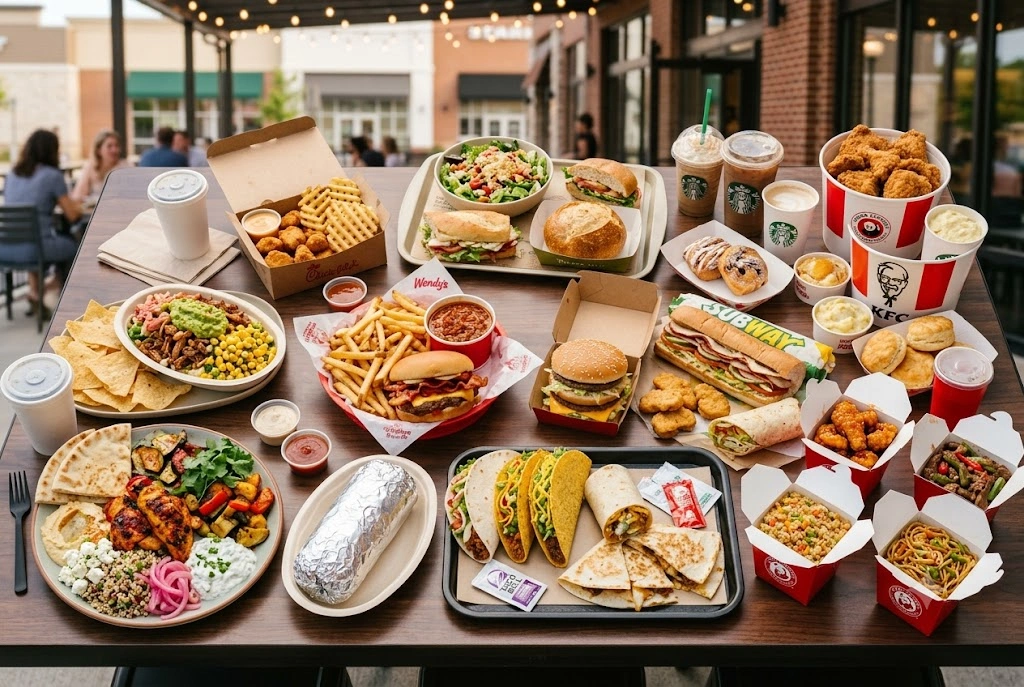
The strongest healthy fast food options in 2026 come from build-your-own chains and grilled proteins. Cava and Chipotle bowls, Chick-fil-A grilled nuggets, Wendy’s chili, and Taco Bell Fresco Style tacos all deliver 25 grams of protein or more for under 500 calories. Sodium, not calories, remains the hardest number to control at the drive-thru. On the pizza side, a thin-crust vegetable pizza with light cheese runs roughly 130 to 180 calories per slice, and carryout deals cut the price by 30 to 50 percent.
All figures below come from chain nutrition calculators and were checked in August 2026. Portions and recipes vary by location, so confirm numbers in the chain app before you order. Must Check Checkers Fast Food Menu
What Changed in 2026
The USDA and HHS released the 2025-2030 Dietary Guidelines for Americans on January 7, 2026. Three points matter at the counter. Adults and teens ages 14 and up should stay under 2,300 mg of sodium per day. Saturated fat should stay below 10 percent of daily calories. The guidance also pushes people toward whole foods and away from heavily processed items.
Restaurant food supplies a large share of the sodium Americans eat. That single fact changes how you should judge a menu. A 400-calorie sandwich carrying 1,400 mg of sodium is not a light meal. It spends more than half your daily salt budget on one item.
Chains responded in 2026 by expanding bowls, grilled proteins, and vegetable sides. They did not shrink portions. The burden of selection still sits with you.
The Four Numbers That Define a Smart Order
Skip calorie counting alone. Professionals judge a fast food order on four metrics at once.
| Metric | Target per meal | Why it matters |
|---|---|---|
| Calories | 400 to 700 | Keeps one meal inside a normal daily range |
| Protein density | 7 g or more per 100 calories | Predicts fullness better than calories alone |
| Sodium | Under 800 mg | Leaves room for the rest of your day |
| Fiber | 5 g or more | Slows digestion and steadies blood sugar |
Run any order through this grid and the winners separate fast. Chick-fil-A grilled nuggets score about 19 grams of protein per 100 calories. A crispy chicken sandwich scores roughly 6. Both taste good. Only one keeps you full until dinner.
Protein density explains why healthier fast food options rarely feel like a sacrifice. You eat the same volume of food and absorb fewer calories from it.
Chain-by-Chain: The Best Order at Each
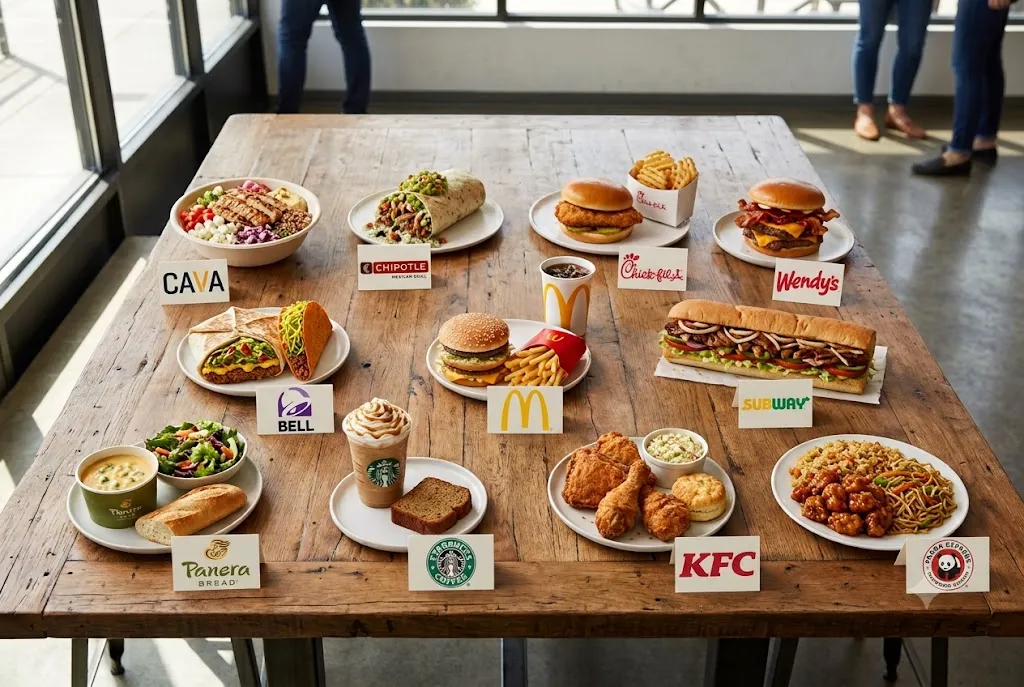
Cava
Order: Greens and grains base, grilled chicken, hummus, tomato and cucumber salad, lentils, splash of lemon. Roughly: 500 to 600 calories, 35 g protein or more.
Cava earns its top ranking because the defaults work. Olive oil, lean protein, and vegetables form the base rather than the exception. The trap is dip stacking. Add tzatziki, harissa, feta, and a pita, and sodium clears 1,600 mg. Choose one creamy dip and stop.
Chipotle
Order: Chicken burrito bowl, half rice or no rice, black beans, fajita veggies, fresh tomato salsa, romaine. Roughly: 450 to 550 calories, 40 g protein.
Double chicken pushes protein past 55 grams for about $3 more. That is the single most efficient upgrade in fast food. The same bowl with double rice, cheese, sour cream, and queso passes 1,100 calories. The bowl is not healthy or unhealthy. Your build decides.
Chick-fil-A
Order: 8-count Grilled Nuggets with Kale Crunch Side. Roughly: 250 calories, 28 g protein.
The nuggets alone deliver 130 calories, 3 g of fat, and 25 g of protein. Sodium is the weak point across this menu, since one order already carries 440 mg. Pair with water, not a lemonade, and you finish under 500 mg for the meal.
Wendy’s
Order: Small chili plus a Jr. Hamburger, or the Apple Pecan Salad with grilled chicken. Roughly: 440 calories and 31 g protein for the salad.
Chili is the most underrated item in American fast food. It supplies beans, beef, and fiber for around 240 calories. Watch the sodium, which lands near 800 mg per cup. Ask for the dressing on the side and use half.
Taco Bell
Order: Two Fresco Style Grilled Chicken Soft Tacos, or the Chicken Power Bowl without avocado ranch. Roughly: 280 calories and 16 g protein for two tacos. The bowl lands near 470 calories with 27 g protein.
Fresco Style swaps cheese, sour cream, and mayo-based sauces for diced tomatoes. It cuts 20 to 30 percent of calories on most items and costs nothing extra. Say the words at the register or tap the option in the app. Sodium still runs high, so treat the Power Bowl as your full salt allowance for that meal.
McDonald’s
Order: Egg McMuffin, or a hamburger with apple slices. Roughly: 310 calories and 17 g protein for the McMuffin.
The Egg McMuffin outperforms nearly every burger on this menu for protein per calorie. Its 770 mg of sodium is the cost. Compare that with the Big Breakfast with Hotcakes at roughly 1,340 calories and 2,070 mg of sodium, and the gap becomes obvious. Two items, same restaurant, opposite outcomes.
Subway
Order: 6-inch turkey on multigrain, every vegetable, mustard or red wine vinegar, no cheese. Roughly: 220 to 280 calories, 18 g protein.
Subway rewards restraint and punishes autopilot. Bread, cheese, and creamy sauces account for most of the damage. Order the same fillings in a protein bowl and you drop the bread calories entirely while keeping the vegetables.
Panera Bread
Order: Strawberry Poppyseed Salad with chicken, or a Mediterranean bowl. Roughly: 370 calories, 29 g protein, 710 mg sodium.
Panera looks like a health chain and behaves like a bakery. Pastries range from 400 to more than 800 calories. Build a Pick Two from a broth-based soup and a half sandwich, then swap chips for an apple.
Starbucks
Order: Egg White and Roasted Red Pepper Sous Vide Bites, roughly 170 calories with 12 g protein.
Food is rarely the issue here. Drinks are. A large sweetened latte often carries 30 to 45 grams of added sugar, which alone can exceed the daily added sugar recommendation. Cut the syrup pumps in half, choose nonfat or a lower-calorie milk, and skip whipped cream. That habit alone saves 150 to 250 calories per visit.
KFC
Order: Two Original Recipe drumsticks with green beans. Roughly: 285 calories, close to 30 g protein.
A drumstick delivers 130 calories with 14 g of protein, which is remarkable for fried chicken. The biscuit adds roughly 180 calories of refined flour and fat. Leave it.
Panda Express
Order: Super Greens base with String Bean Chicken Breast or Grilled Teriyaki Chicken. Roughly: 280 to 390 calories.
Swapping fried rice or chow mein for Super Greens removes 200 to 300 calories before you touch the entree. Ask for sauce on the side, since the sugar sits in the glaze.
In-N-Out, Jersey Mike’s, and Jimmy John’s
Each chain has a hidden lever. In-N-Out serves burgers Protein Style in lettuce. Jersey Mike’s builds a sub in a tub. Jimmy John’s makes an Unwich. All three remove 200 to 350 calories of refined bread while keeping the filling intact.
The Sodium Problem Nobody Prices In
Calories are printed on the menu board. Sodium usually is not. That asymmetry misleads people daily.
Three practical fixes work at every chain. First, order sauces and dressings on the side, since they concentrate salt in small volumes. Second, avoid stacking two cured or processed proteins, such as bacon added to deli turkey. Third, drink water with the meal, because dehydration worsens how salt affects you.
People managing blood pressure should treat one fast food meal as a 1,000 mg sodium event and plan the rest of the day around it. That approach is realistic. Perfection is not.
Breakfast, Sides, and Drinks
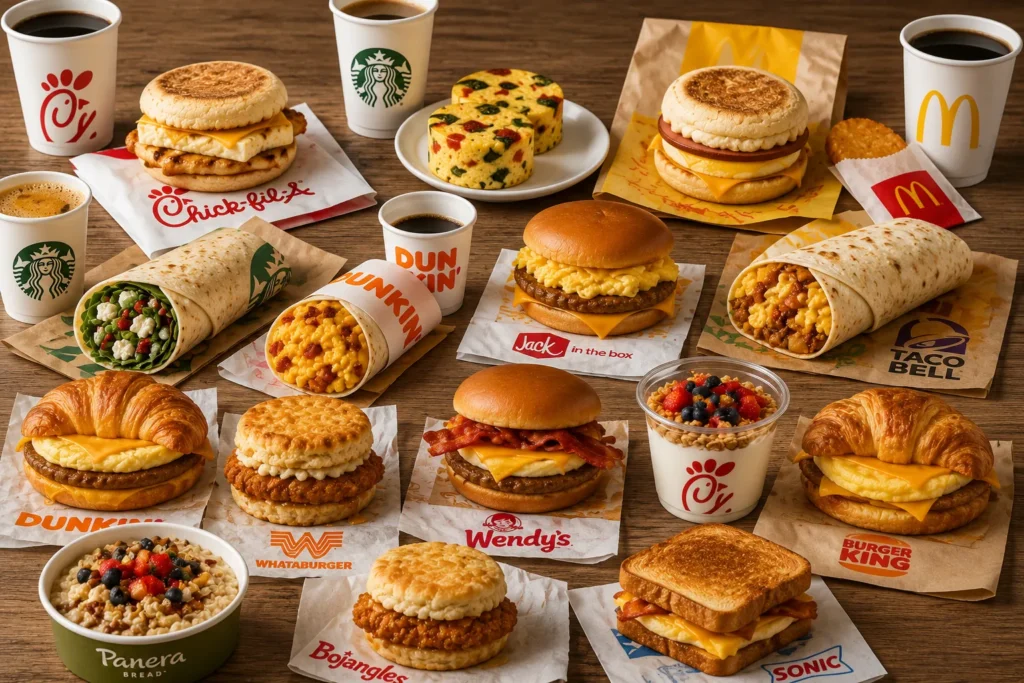
Breakfast menus punish carelessness more than lunch menus do. Sandwiches and burritos routinely land between 500 and 700 calories once cheese, sauce, and a side arrive. Egg-based sandwiches on English muffins remain the most reliable pick. Plain oatmeal works when you skip the brown sugar topping.
Sides deserve equal attention. Apple slices, side salads, kale sides, and green beans each cost under 100 calories. Every fried side costs 300 or more. At Burger King, for example, every snack and side on the board arrives from a fryer, which makes the drink and entree your only real levers.
Liquid calories cause the most silent damage. A large shake approaches 800 calories. A large frozen soda adds up to 340. Unsweetened iced tea, black coffee, and water cost nothing nutritionally and free your budget for actual food.
Pizza: The Complete 2026 Playbook
Pizza gets excluded from most health guides. That is a mistake. Pizza responds to smart ordering better than almost any other category, and pizza deals make it the cheapest hot meal in America.
Five rules that transform any pizza order
- Choose thin crust. Thin crust saves roughly 75 calories per slice against pan or hand-tossed. Across four slices, that is a full meal’s worth of calories.
- Ask for light cheese. This request removes about 30 to 40 calories per slice and cuts saturated fat noticeably.
- Load vegetables, limit cured meats. Mushrooms, peppers, onions, spinach, and tomatoes add fiber for almost nothing. Extra pepperoni or Philly steak adds 30 to 80 calories per slice.
- Order a medium and eat two or three slices. Portion decisions beat topping decisions. A medium thin-crust vegetable pizza gives you a 300 to 450 calorie meal.
- Add a protein side, not a bread side. Plain or lightly sauced bone-in wings run about 55 to 65 calories each with 6 g of protein. Breadsticks and cheesy bread deliver neither.
Best orders by chain
| Chain | Smart order | Per slice |
|---|---|---|
| Pizza Hut | Small Thin ‘N Crispy Veggie Lover’s | About 100 calories |
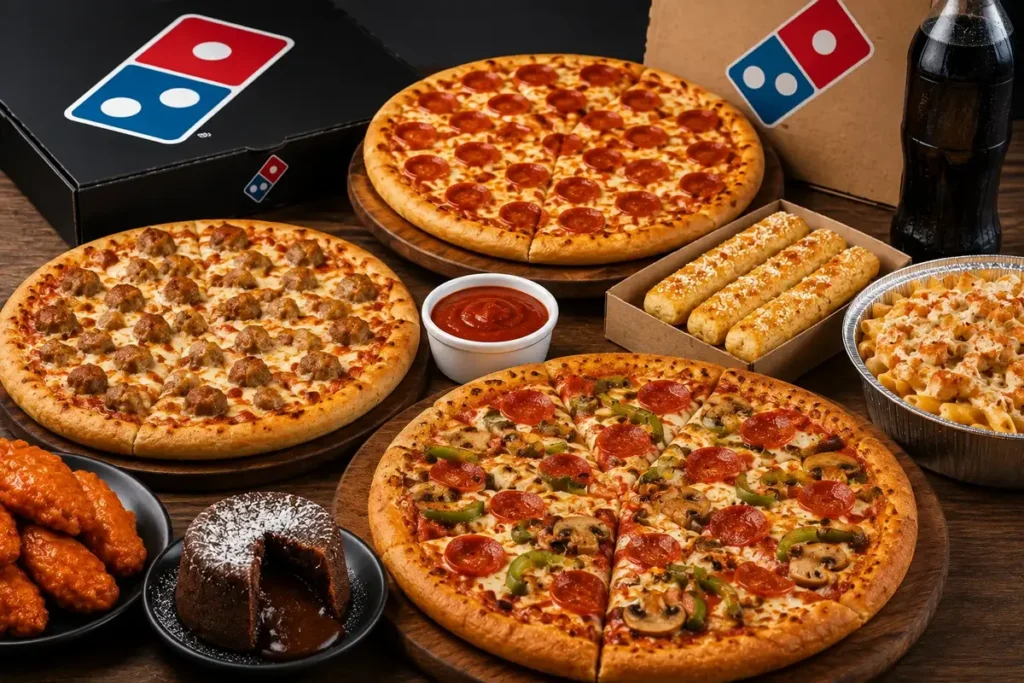
| Domino’s | Medium 12-inch Crunchy Thin, light cheese, Pacific Veggie toppings | 130 to 150 calories |
| Papa Johns | Original thin crust, garden vegetable, light cheese | About 170 to 200 calories |
| Little Caesars | Thin crust cheese or veggie | Around 160 calories |
| California Pizza Kitchen | Thin crust with grilled vegetables | Light cheese by default |
For reference, a medium hand-tossed cheese slice at Domino’s carries about 200 calories, 8 g of fat, and 360 mg of sodium. The comparable Papa Johns slice carries around 210 calories and 520 mg of sodium. Sodium separates these chains more than calories do.
How to use pizza deals without wrecking the meal
Pizza chains price for volume. Deals reward you for ordering more than you need. Structure the order so the discount works in your favor.
Deals that circulated in 2026, which rotate frequently:
- Domino’s Mix and Match at $6.99 for each of two or more items
- Domino’s weeklong carryout offer near $7.99 for a one-topping pizza
- Domino’s Perfect Combo bundles around $19.99
- Pizza Hut $10 Big New Yorker, an extra-large foldable pizza
- Pizza Hut $3 Personal Pan Pizzas on Tuesdays for carryout
- Papa Johns XL New York style near $11.99 on promotional days
- Papa Murphy’s take-and-bake discounts such as $10 off $25
Five tactics turn those offers into a genuinely good meal.
Carryout beats delivery. Carryout-only codes are consistently the deepest discounts, and you skip delivery fees plus tip. The savings often exceed 40 percent.
Change the crust, keep the price. Most deals let you switch to thin crust at no charge. The discount stays. The calories drop.
Stack loyalty with one code. Chains generally allow only one promo code per order. Rewards currency is the exception. Papa Rewards dollars, Hut Rewards points, and Domino’s loyalty points usually apply on top of a code. That is the only legitimate stack.
Split the bundle across two meals. A $19.99 two-pizza combo becomes reasonable when you plan four servings, not two. Box half before you sit down.
Use take-and-bake for maximum control. Papa Murphy’s style pizzas let you add your own vegetables and bake at home, which removes the holding-cabinet grease and gives you full portion control.
Prices and codes change weekly and vary by franchise. Confirm current offers in the chain app before ordering, since app-exclusive deals now beat printed coupons at most chains.
Ordering Scripts That Work
Say these exact phrases. Staff recognize all of them.
- Taco Bell: “Fresco Style, please.”
- In-N-Out: “Protein Style.”
- Jersey Mike’s: “In a tub.”
- Chipotle: “Half rice, double fajita veggies.”
- Any pizza chain: “Thin crust, light cheese, well done.”
- Any salad: “Dressing on the side.”
- Any burger: “No mayo, no butter on the bun.”
Six words at the register regularly save 200 to 400 calories. No app, no math, no menu study.
Five Mistakes That Undo a Good Order
Trusting the salad by default. Fried toppings, cheese, and creamy dressing routinely push salads above 800 calories. The base is not the meal.
Ignoring combo inflation. A meal upgrade adds fries and a soda for a few dollars and 500 or more calories.
Reading calories only. Two 500-calorie meals can differ by 1,200 mg of sodium.
Skipping protein to save calories. A low-calorie, low-protein meal leaves you hungry within two hours and drives snacking.
Eating standing up in the car. Portion awareness collapses without a plate. Move the food to a plate or a napkin and eat seated when possible.
Match the Order to Your Goal
Weight management: Chipotle salad bowl with no rice, or a Cava bowl at half grains. Both stay near 500 calories with high protein.
Muscle building: Chipotle double-chicken bowl at 55 g protein, or three grilled chicken soft tacos near 480 calories with 36 g protein.
Blood pressure: Thin-crust vegetable pizza with light cheese, plus a side salad. Sodium per slice stays comparatively low, and you control the portion.
Blood sugar: Grilled protein plus non-starchy vegetables, with beans instead of rice. Fiber and protein blunt the glucose response.
Kids: Grilled nuggets, apple slices, and milk or water. Skip the fried side rather than the entree.
Frequently Asked Questions
What are the healthiest fast food options in 2026?
Cava and Chipotle bowls built on vegetables and grilled protein rank first, followed by Chick-fil-A grilled nuggets, Wendy’s chili, and Taco Bell Fresco Style items. Each delivers strong protein per calorie with moderate sodium.
Which fast food healthy options support weight loss best?
Choose meals with 25 g or more protein under 500 calories. A Chipotle salad bowl without rice, a Cava salad base with chicken, and Wendy’s Apple Pecan Salad all qualify.
Can pizza fit a healthy diet?
Yes. A medium thin-crust vegetable pizza with light cheese gives you a 300 to 450 calorie meal for two to three slices. Pair it with a salad and drink water.
Which chain requires the most careful ordering?
McDonald’s, Burger King, KFC, and Starbucks. Their default menus lean toward fried items, high-fat sauces, and sweetened drinks, so nutritious picks exist but demand deliberate selection.
Is Subway automatically a healthy choice?
No. Sodium accumulates quickly through processed meats, cheese, and sauces. A vegetable-heavy 6-inch with mustard stays light. A footlong with cheese and creamy dressing does not.
How often can I eat fast food?
Once or twice a week fits most balanced eating patterns when you apply the four-number framework. Frequency matters less than what you order.
The Bottom Line
Healthy fast food is a skill, not a location. Every chain in America hides a 400-calorie, 30-gram-protein meal behind a menu built to sell fries. Learn the four numbers, memorize three ordering phrases, and choose thin crust with vegetables when pizza night arrives. Pair that habit with carryout deals and you eat better than most home cooks manage on a busy Tuesday, for less money.
Verify nutrition data in each chain’s app before ordering, since recipes and portions change through the year.