
Calories in Chicken Breast
Chicken breast is one of the most favorite foods for people who are on a health diet, a protein diet and a low calorie diet. Versatile, quick to cook and able to be mixed into a wide range of diets, it is popular in many weight loss diets, fitness meal plans and home cooking. Calories in chicken breast usually mean skinless, boneless chicken breast, the leanest and most common type of chicken breast. The amount of calories will vary based on how the chicken is cooked, whether or not the skin is included and whether the chicken is cooked or raw. Chicken breast is a very healthy and low-calorie source of protein, as a plain food.
Calories in Raw Chicken Breast
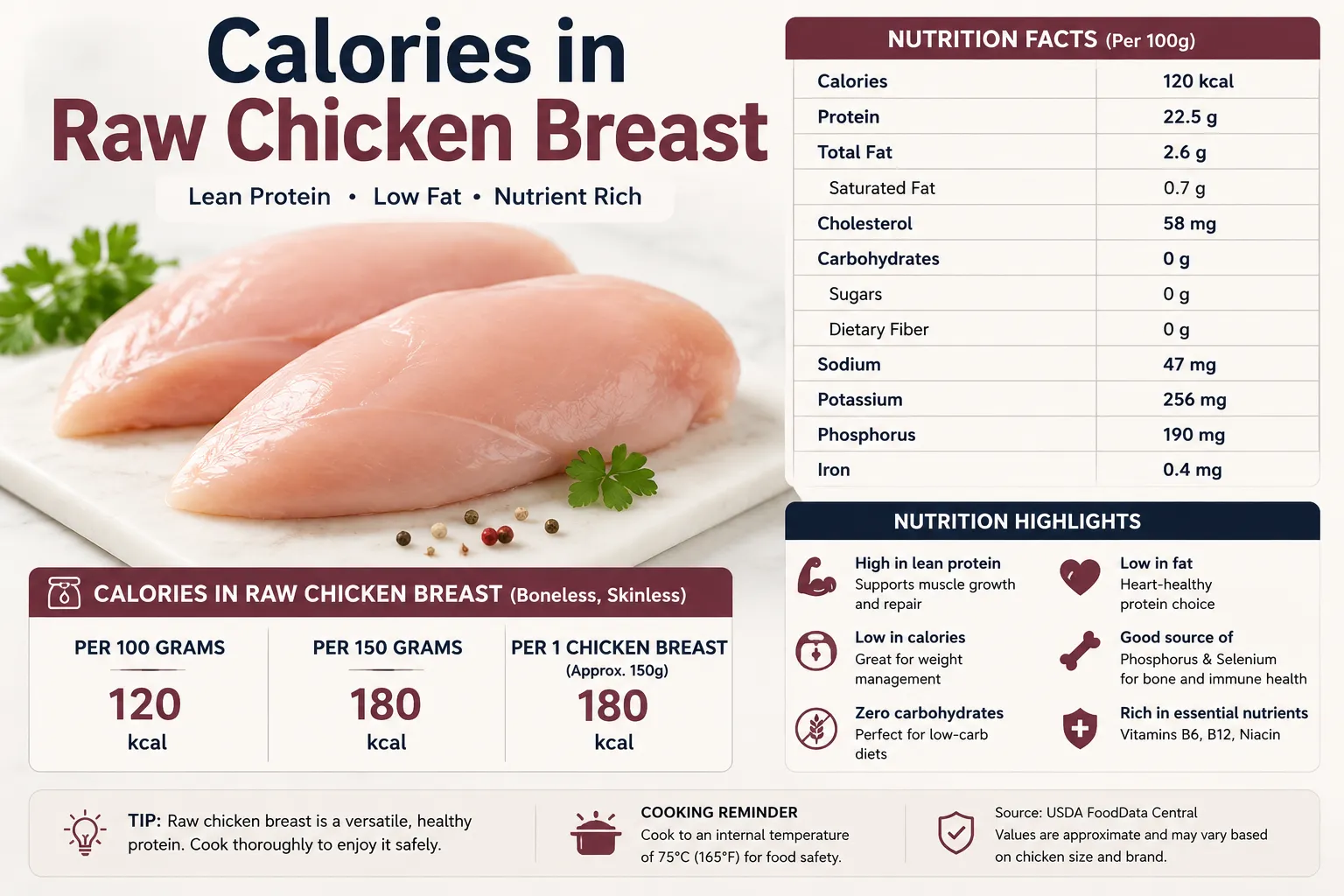
Raw, skinless chicken breast 100g’s contains around 120–130 calories. This will vary slightly depending on the chicken ‘cut’ and size. It is usual for people to weigh the raw chicken breast before they start cooking it, especially when making a chicken meal or counting calories. Raw chicken is watery and therefore, it will appear to be less calorie dense per 100g than cooked chicken. The number of calories remains the same, though, whether or not it has been cooked. The main difference is that raw chicken is more watery and appears to be lower in nutrition value per calorie.
Calories in Cooked Chicken Breast
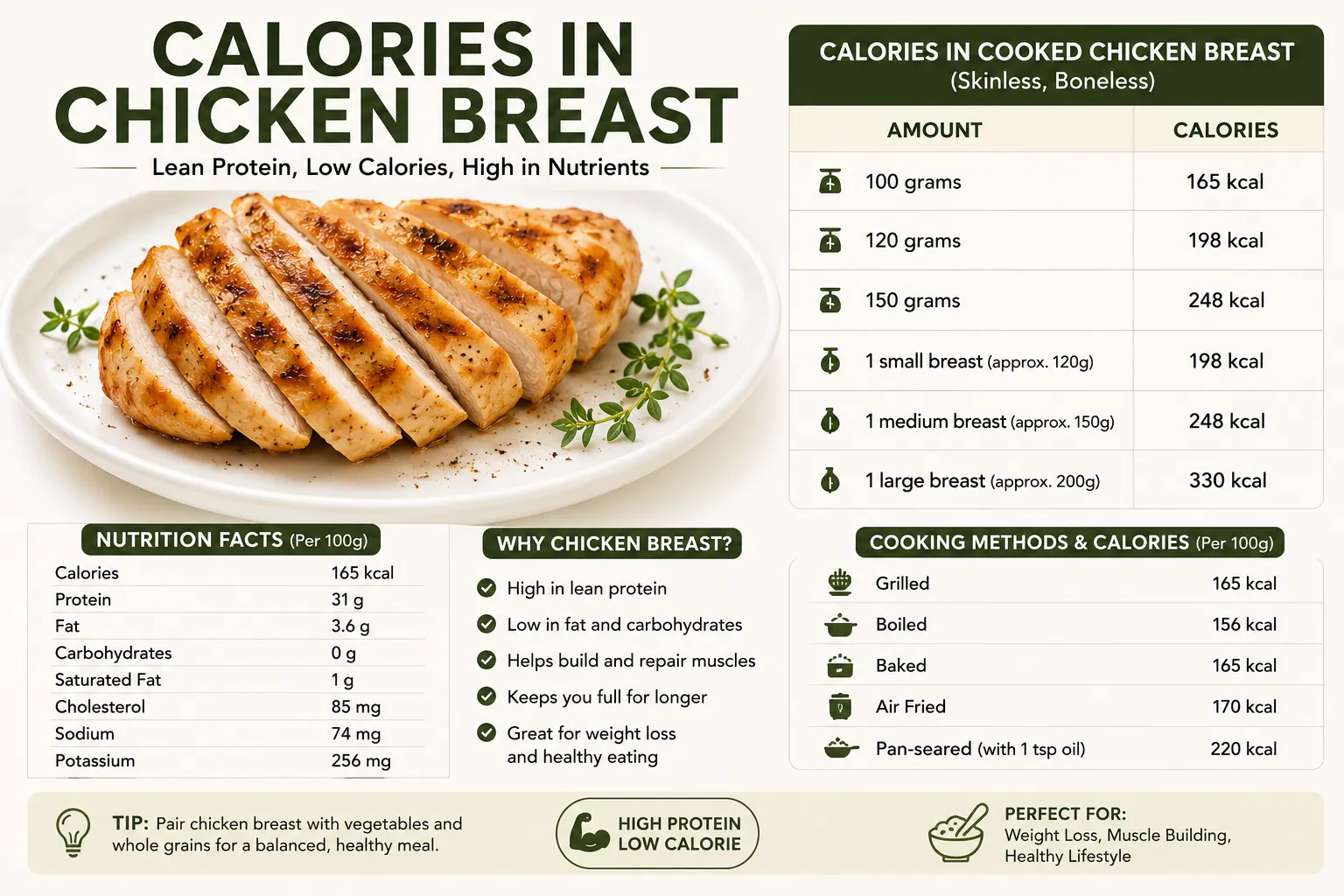
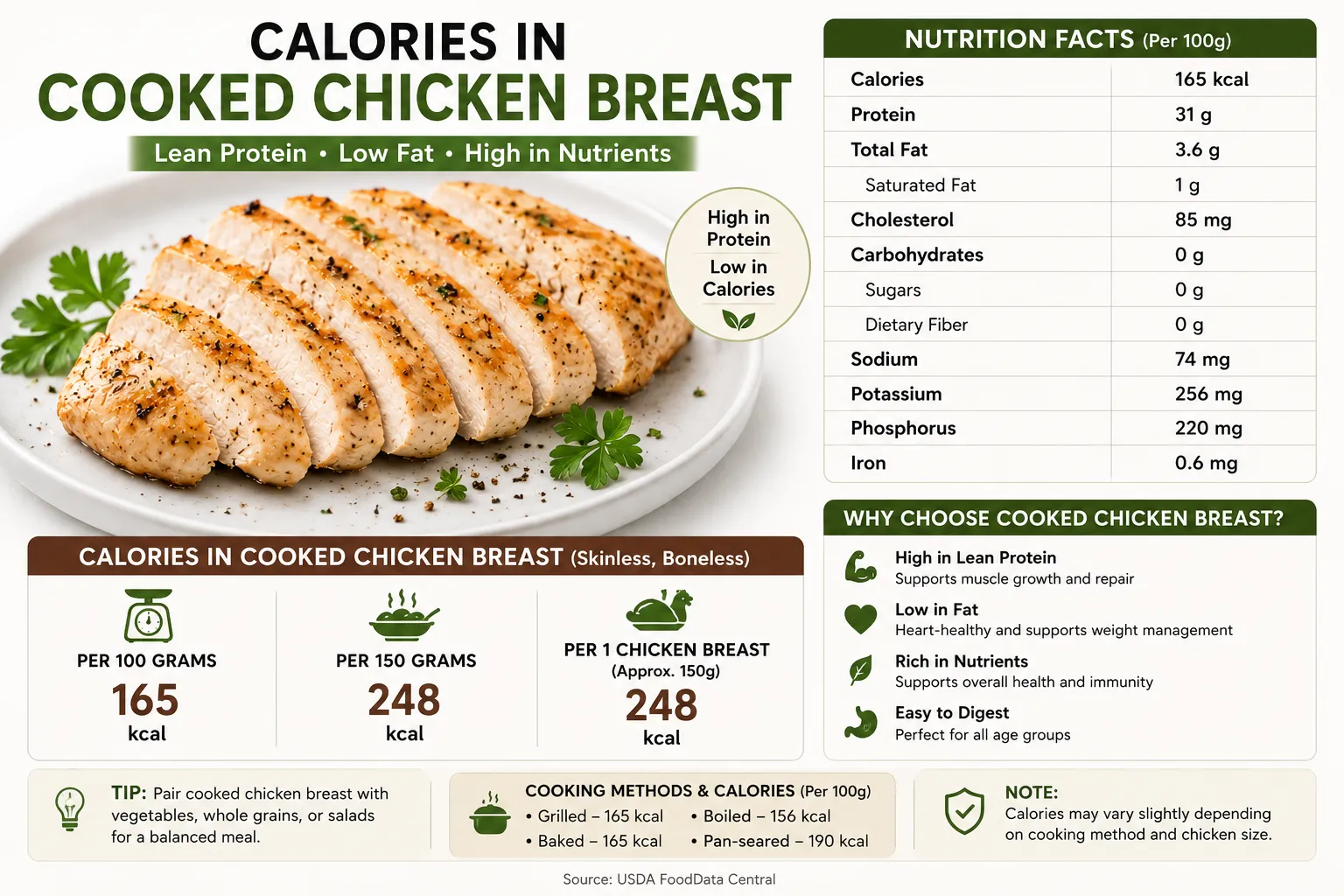
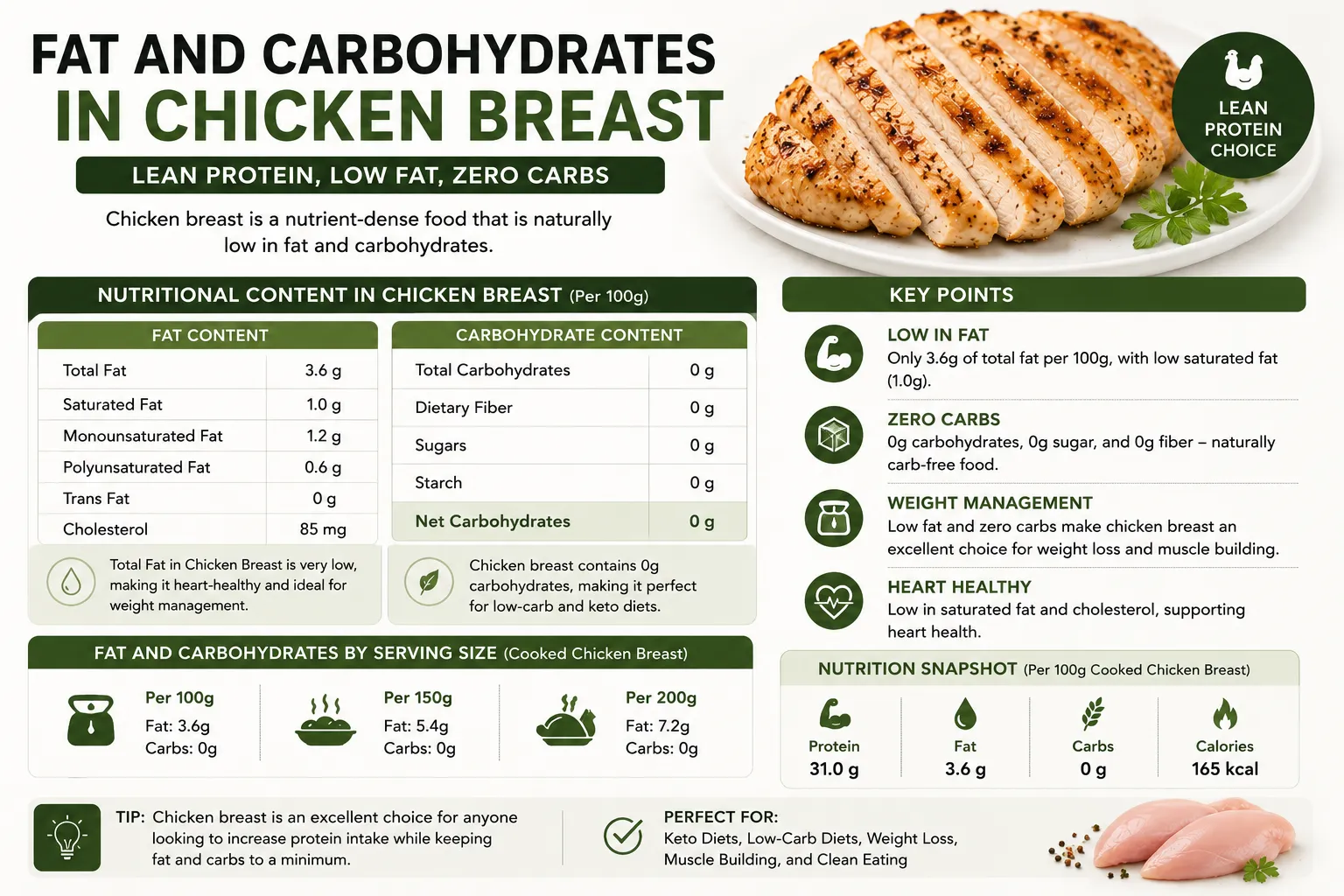
Once the meat of the chicken is cooked, it has more calories per 100 grams. The calories of a cooked, skinless chicken breast are approximately 165 per 100 grams. That’s because meat dries out when cooked, resulting in a denser chicken. If a chicken is cooked, its total number of calories does not increase, it is just that the same number of calories are contained in a lighter weight. This is what makes it more caloric per 100g of cooked chicken breast than raw chicken breast. Those who follow a calorie counting diet should keep in mind if they are cooking or not cooking the foods they are counting.
Protein Content in Chicken Breast
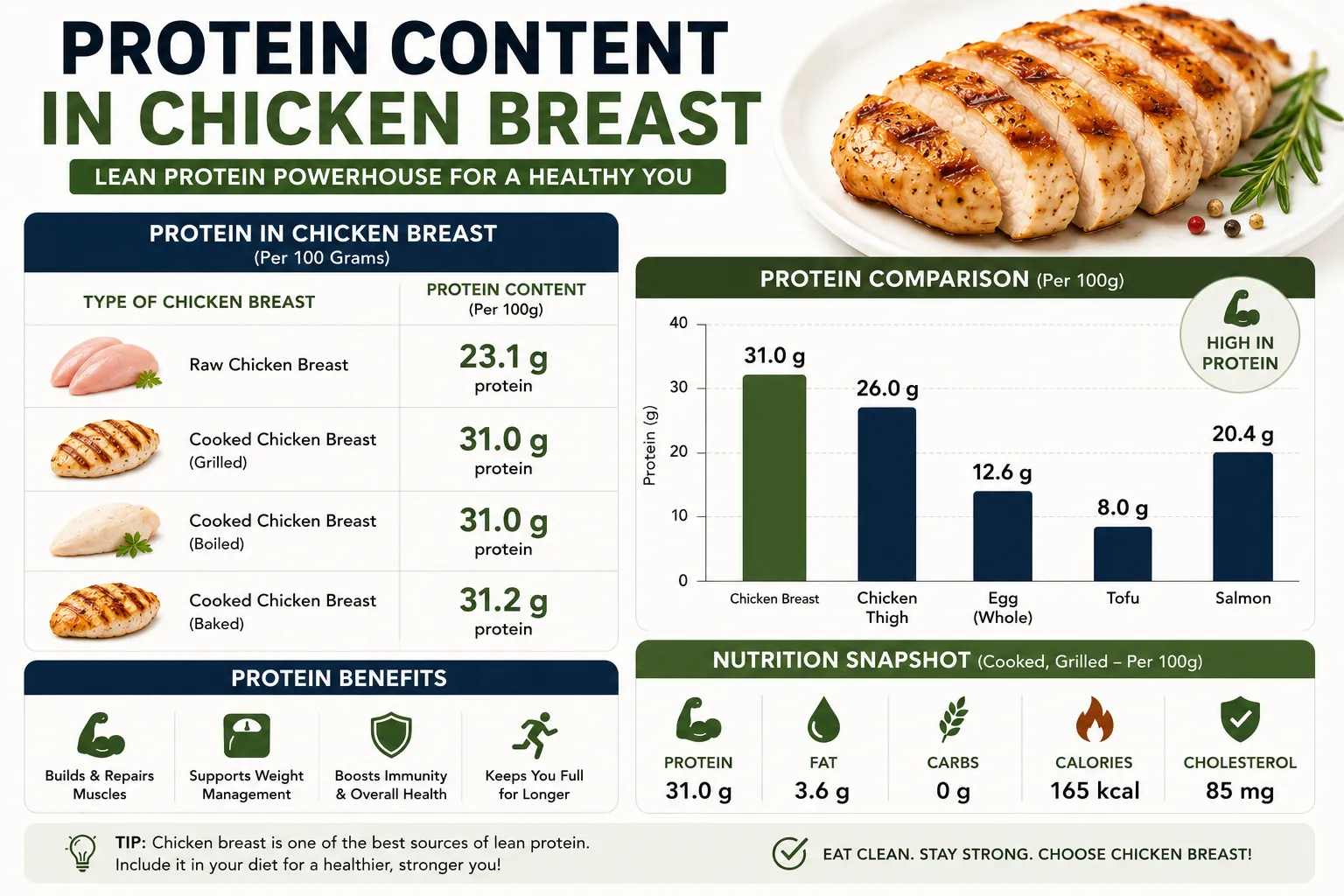
The reason why chicken breast is so popular is its high amount of protein. There are about 31 grams of protein in 100 g of cooked chicken breast. Protein is exceedingly important for muscle repair, muscle growth and overall body function. It also helps people feel satiated for a longer period, helping to curb overeating. Chicken breast is a good source of protein and low in calories, making it a popular option for those looking to increase muscle mass or lose weight without compromising on their caloric intake. That’s one of the reasons why this is a preferred option of athletes, gym players and health enthusiasts.
Fat and Carbohydrates in Chicken Breast
A plain chicken breast is low in fat, and almost free of carbohydrates. The fat content in a cooked, skinless chicken breast will range from 3-4 grams per 100 grams, depending on the cut and method of preparation. Low in carbohydrates, or carbohydrate free when breaded, sauced or marinated. This makes chicken breast ideal for low carb diets, keto diets and all eating plans. This is a fat-free protein that’s low in carbohydrates, making it a lean and efficient protein source.
There are many different ways which determine how these Calories are Changed.
How Cooking Method Changes Calories
The way that you prepare your chicken breast can affect the amount of calories. The healthiest foods to choose are those that are grilled, baked, boiled or poached and less fatty by-products are added to them. A plain grilled or baked chicken breast will keep 165 calories per 100g cooked. If the chicken breast is boiled or poached, then the additional oil or butter is not added and it is also a low calorie one. The calories can quickly pile up however, if oil is used extensively while pan frying or deep frying, or if there is lots of oil being used while cooking. Oil is calorie dense which means that even a small amount can contribute to the overall calorie count.
Calories in Fried or Breaded Chicken Breast
Breaded or fried chicken breast will have more calories than plain chicken breast because of the additional fat added to the chicken when it is breaded or fried. The additional calories from the breading are absorbed into the chicken when it’s coated in flour, breadcrumbs or batter. If it is and then fried in oil it has even more calories. Depending on the recipe and the size, a breaded and fried chicken breast can have 300 to 500 calories or more. This is a great deal bigger than a regular barbequé chicken breast. Calorie-for-calorie, there are no comparisons between fried chicken breast and plain chicken breast when it comes to people on a calorie control diet.
Importance of Portion Size
The other important consideration to make when counting calories in chicken breast is the portion size. Chicken breasts vary in size and many people eat more than they realize. The calories of a small cooked chicken breast are approximately 140 to 180, and the calories in a medium sized portion are approximately 220 to 250. A large chicken breast (approx 200g) requires 330 calories to prepare. The calories may quickly add up if you consume two chicken breasts at a single sitting. This is why it is helpful to weigh food at times, particularly those who are dieting or limiting calories.
Chicken Breast for Weight Loss
Chicken breast is a popular food for weight loss due to its minimal calories, high protein and bulk. High protein foods often help to curb hunger, making it easier to follow a calorie-controlled diet. Don’t be afraid of fatten foods – a rich, healthy dish of chicken breast, veggies and a healthy side. Chicken breast is therefore a good option for anyone who wants to lose body fat but consume adequate protein to keep them full and energized all day.
Chicken Breast for Muscle Building
Chicken breast is also a muscle builder favorite food. Regularly active people require sufficient protein to aid in repairing muscle tissue following activity, and to promote muscle development over time. Chicken breast is a source of complete protein, which means it’s a source of all the essential amino acids needed by the body. It has low fat content and high protein content therefore it can be easily added to any bulking, cutting or performance nutrition diet. Chicken breast is a regular staple in the diets of sports enthusiasts and bodybuilders because of its richness in protein, versatility, and its availability for a cheap price.
Nutrients in Chicken Breast
But chicken breast is not only a great source of protein, it also has a large amount of important vitamins and minerals. It has niacin, which assists the body to use food for energy and vitamin B6, which assists in metabolism and brain function. It also is rich in selenium (which helps protect cells from damage and maintain a healthy immune system) and phosphorus (which is important for bones and teeth). While not as high in vitamins and minerals as vegetables or fruits, chicken breast is still a good source of nutrients in a well-balanced diet. Not only is it a good source of calories and protein but also tons of nutrients.
Hidden Calories from Add-ons
If you’re eating the chicken breast, keep in mind the calories from additional ingredients. The extra calories that come with these sauces, marinades, butter, cheese, mayonnaise and creamy dressings can take the health out of a healthy meal. Simple products like olive oil or avocados can add to the calories, whether or not it’s a good fat. A chicken breast is low in calories but can become high in calories with a high calorie side dish or when served with heavy meat and poultry toppings. The whole meal should always be taken into account when calculating the calories.
Final Thoughts
If you are looking for a protein-packed, healthful, calorie-rich option to eat, then chicken breast is one of the most versatile. The calories in raw skinless chicken breast are approximately 120 to 130 calories per 100 grams and cooked skinless chicken breast about 165 calories per 100 grams. A low fat, high protein, carbohydrate free, plain product. Serving sizes, preparation and other ingredients can affect the number of calories. Healthy, filling and versatile, chicken breast is a popular food item among people who want to eat healthy, lose weight and build muscles.